Bathrooms are among the most frequently used spaces in any home, and their design goes far beyond aesthetics. A few purposeful safety upgrades can make the room more comfortable and secure without sacrificing its style.
Bathrooms combine moisture, hard surfaces, and tight spaces, so even a small improvement can make a meaningful difference. Safety planning is especially valuable for households with young children, older adults, anyone recovering from an injury, and the family members or caregivers helping them stay independent.
There is a practical reason to start early: the CDC reports that falls among older adults lead to about 3 million emergency-department visits each year. Simple changes around the tub, shower, and toilet can make a real difference.
Start With the Areas You Use Most
Focus first on entry and exit points, wet floors, water temperature, and visibility. The following five upgrades give you a clear roadmap for a safer, more comfortable bathroom.
Where should you start?
- Choose grab bars first if balance, standing, or stepping into the tub feels uncertain.
- Prioritize a tub-to-shower conversion when a high tub wall is the main obstacle.
- Address slick flooring, poor lighting, and hot water settings before they become everyday risks.
01
Install Grab Bars Where Support Matters Most
Grab bars provide a secure handhold beside the toilet and inside or just outside a tub or shower. Today’s options come in finishes and profiles that complement modern fixtures, so they can look intentional rather than institutional.
Placement matters as much as the bar itself. A professional grab bar installation ensures it is anchored properly and positioned where a person naturally needs support. Towel bars are not a substitute; they are not designed to hold body weight.
For reference, the U.S. Access Board’s ADA Standards use a 33–36 inch height range for horizontal grab bars in covered facilities. This is not a universal requirement for private homes. In a private home, the right placement should be based on the user, the fixture, and secure wall anchoring, which is why a professional assessment matters.
02
Make Bathing Easier to Access
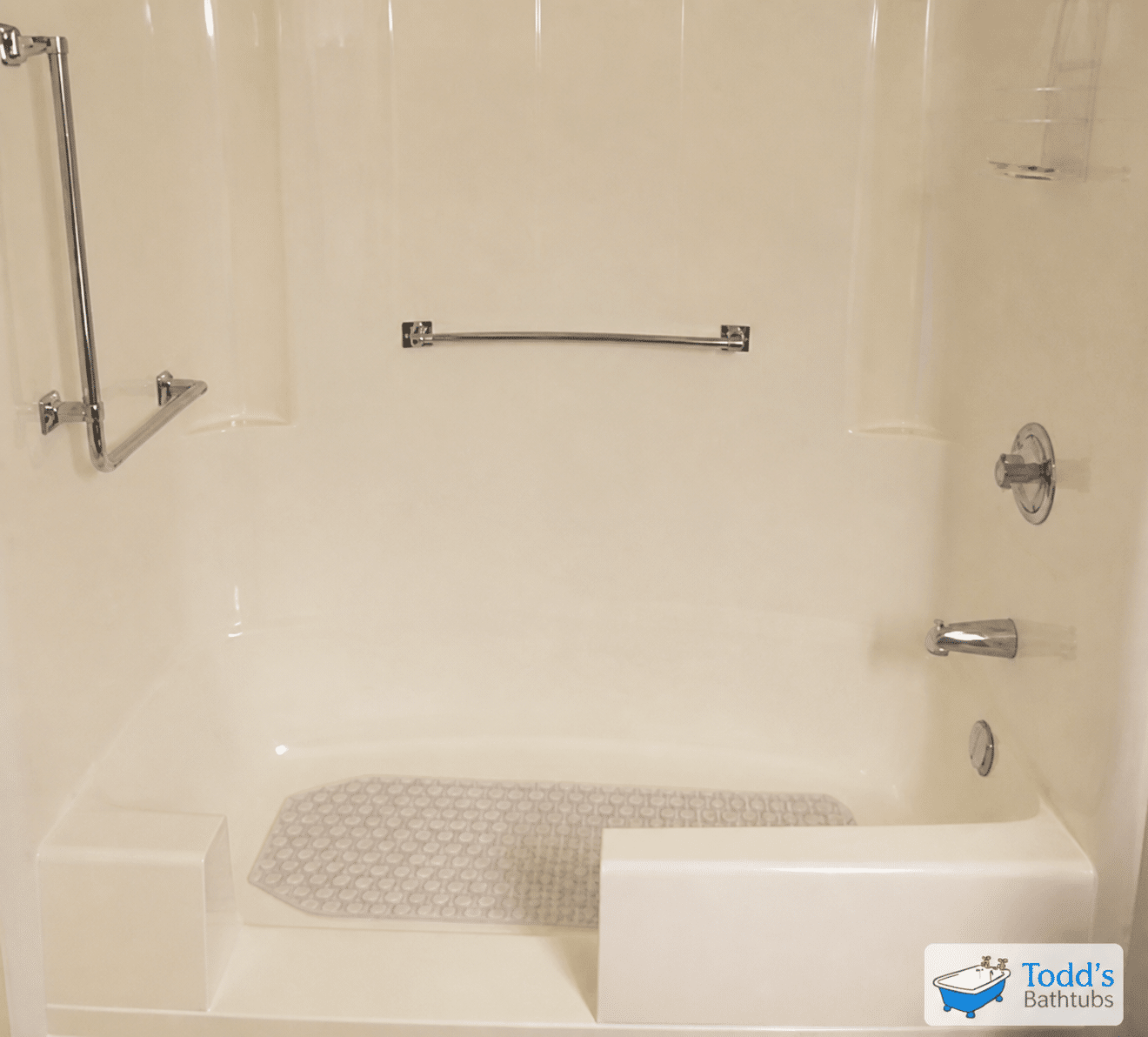
High tub walls can be one of the hardest obstacles in a bathroom. A shower bench, raised toilet seat with support arms, or fold-down seat can reduce strain and create a more confident daily routine.
For a more complete accessibility change, a tub-to-shower conversion removes the high step at the tub edge and gives the room a cleaner, more open feel. For Todd’s fiberglass tub-to-step-in-shower conversions, a shower-curtain opening is typically estimated at 5–7 hours; shower doors generally add a second day. The finished surface then needs a 24–48 hour cure period before use.
03
Add Grip Underfoot
Wet tile, soap residue, and bath oils can turn a beautiful floor into a slippery one. Textured tile, slip-resistant vinyl, and professionally applied surface treatments can improve traction without changing the room’s style.
If you are refinishing a tub or shower, plan safety at the same time. When we refinish your tub or shower, we can apply an optional slip-resistant coating to the tub or shower floor. Refinishing work also needs a 24–48 hour cure period before the surface is used, so follow the care directions given for your specific finish.
- Use a non-slip mat inside the tub or shower only after confirming that it is safe for your particular surface and finish. If your tub or shower has been refinished, follow the care directions provided by Todd’s before using any mat or adhesive product.
- Place secure mats where water tends to collect near sinks and toilets.
- Add grip at tub or shower entry points where a change in surface makes footing less certain.
04
Improve Lighting and Visibility
Good lighting helps you spot wet areas, small objects, and worn surfaces before they become hazards. Combine general overhead light with vanity lighting and, where needed, shower-safe fixtures to reduce shadows.
Motion-activated night lighting is a simple finishing touch that makes late-night bathroom trips safer without the glare of a full overhead fixture.
05
Prevent Scalds With Temperature Control
Hot water can cause a serious burn in seconds, especially for children and older adults. The U.S. Consumer Product Safety Commission recommends setting a water heater no higher than 120°F to help reduce scald risk.
Consider anti-scald devices, such as pressure-balancing or thermostatic controls, at the tub or shower. They help limit sudden temperature swings when another fixture in the home uses water. Test the water before stepping in, and ask a qualified professional to evaluate the right solution for your plumbing.
Bathroom Safety FAQs
Can grab bars be installed in a fiberglass tub or shower?
Fiberglass surrounds need the right evaluation and secure fastening approach. A professional can assess the surface, wall structure, and the user’s needs before recommending placement.
What should I do if a refinished tub feels slippery?
Ask about Todd’s optional slip-resistant coating when refinishing is performed. Follow the 24–48 hour cure guidance and the care instructions for your specific finish before using mats or adhesive products.
Sources and safety guidance: CDC fall facts, U.S. Access Board ADA Standards, and CPSC scald-safety guidance.
Need Help Making Your Bathroom Safer?
Todd’s Bathtubs can help with professionally installed grab bars, tub-to-shower conversions, and repairs that make your bathroom easier to use.